This week I have been focusing on generating ideas for this unit. I am trying to work out how best to choose which project to go down. I have had a majorly busy week at work, so I have been unable to book a tutorial to get the thoughts in place. But I am aiming to get one booked in next week to go through this.
Story Told
Case Study 1: British Airways Identity Design

Initial Design (1973)
- Designers: Negus & Negus.
- Challenge: Create a logo for the newly formed British Airways that reflects Britishness, modernity, speed, and luxury.
- Elements:
- Union Jack to signify British nationality.
- ‘Speedbird’ logo from BOAC and Imperial Airways, symbolizing speed and heritage.
- Application: Geometric icon on airplane tail fins and a serif typeface on the plane body.
- Comparison: The design was less progressive compared to American Airlines’ logo by Massimo Vignelli (1967).

1984 Redesign
- Agency: Landor Associates.
- Changes:
- Introduced a red ‘speedwing’ below the logotype, reminiscent of the original ‘speedbird’ logo.
- Replaced the serif typeface with a new logotype to evoke British elegance and luxury.
- Context: British Airways was privatized under Margaret Thatcher’s government.
Further Redesign (1997)
- Agency: Newell & Sorrell.
- Changes:
- Introduced the ‘Mylius’ typeface by MonoType for a warmer, more human feel.
- Replaced consistent tailfin graphics with 50 original artworks representing Britain’s multicultural society.
- Reception: Mixed reactions; some praised the daring approach, while others criticized it as a departure from British identity.

Current Branding (2008 – Present)
In 2008, subtle changes in colour were made to the British Airways logo. Further, the red and blue colours adorning the “Speedmarque” were given a shade lighter, and the wordmark was made to appear in a softer sky-blue tone.
Case Study 2: Olympic Games Visual Identity
Focus
- Challenge: Create a visual identity for the Olympic Games that communicates to a global audience while reflecting the national identity of the host country.
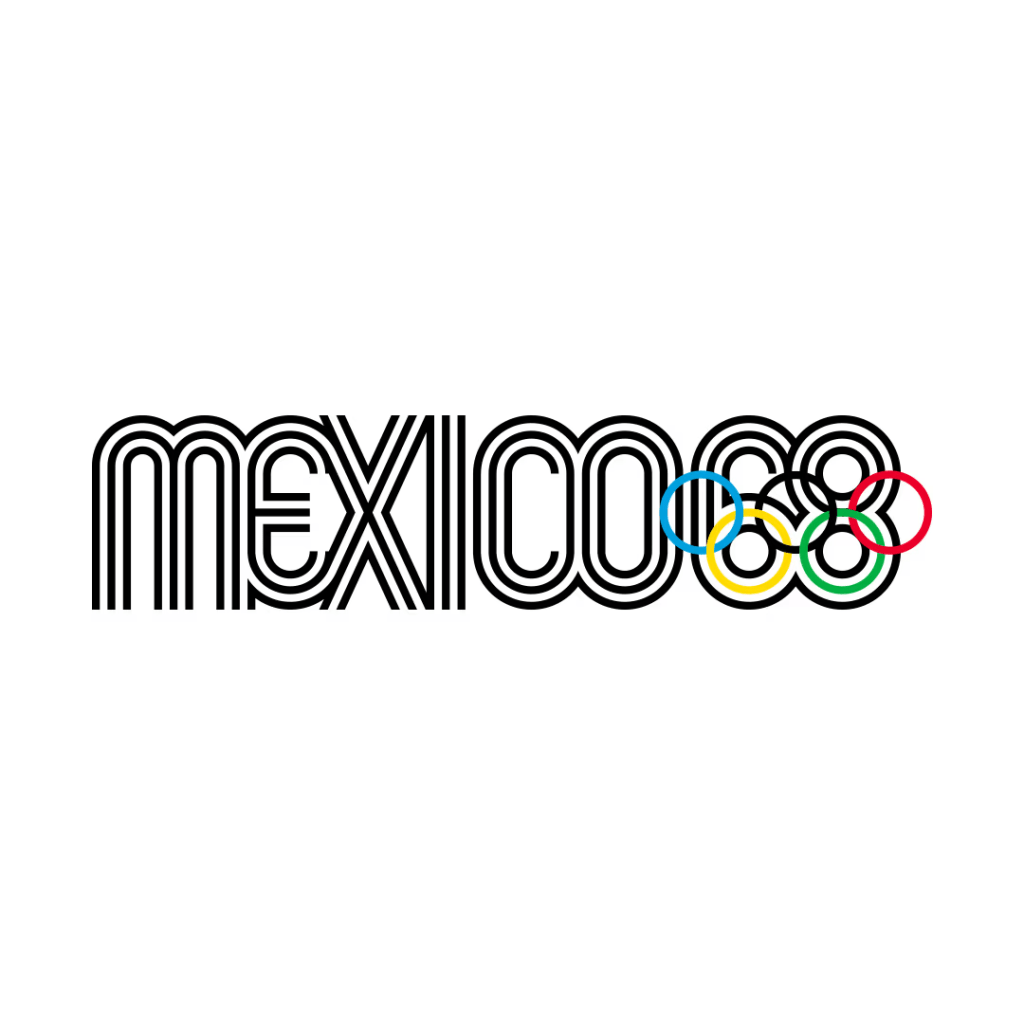
Designer: Lance Wyman
- In 1966, Wyman joined the design team for the Mexico 68 Olympics under the direction of architect Pedro Ramírez Vázquez.
- Design Concept: He developed the iconic logotype and graphics system for the Olympics, which integrated Mexican cultural elements and modernist design principles. This work is considered one of the most influential in the field of graphic design
Background
- First Latin American Olympics: The 1968 Olympics were the first to be hosted in a Latin American country, providing Mexico City an opportunity to showcase itself as a modern metropolis.
- Economic Context: The event occurred during the “Mexican Miracle,” a period of significant economic growth and urbanization in Mexico.
Design Challenge
- Visual Identity: The organizers wanted a visual identity that was cosmopolitan, contemporary, and distinctly Mexican.
- International Competition: An international competition was held to find a designer for the logo and graphic design campaign.
Lance Wyman’s Contribution
- Designer: Lance Wyman, a 29-year-old graphic designer from New York, was selected.
- Inspiration: Wyman drew inspiration from pre-Columbian Mexican artifacts, such as the Aztec Sun Stone and Mayan murals, which he studied at the Museum of Anthropology.
- Design Elements: The bold lines, bright colors, and geometric shapes of these artifacts influenced the design, which also incorporated elements of Op art.
Impact and Legacy
- New Standard: The Mexico 68 design set a new precedent for how governments use design to promote their country’s image internationally.
- Political Context: The designs were also co-opted by local activists to highlight political issues in Mexico, contrasting the glossy imagery of the Games with the country’s darker political realities.
- Infrastructure: The event left a lasting mark on Mexico City’s infrastructure, with the visual identity becoming an integral part of the city’s cultural heritage.
This episode highlights how the Mexico 68 Olympics’ visual identity was not only a design triumph but also a reflection of the cultural and political landscape of the time
RESEARCH TASK
Issues that are happening around Barnsley:
- Economic Development: There has been a strong focus on revitalizing the local economy, particularly supporting small businesses and attracting new investments to the area
- Public Health: Ongoing concerns about healthcare services, including access to mental health support and addressing the backlog of medical appointments due to the pandemic, have been significant topics
- Infrastructure Improvements: Discussions around improving local infrastructure, such as road maintenance, public transportation, and broadband access, have been prominent
- Affordable Housing: The availability of affordable housing and efforts to address homelessness have been key issues, with local councils working on various initiatives to improve the situation
- Environmental Sustainability: There has been a growing emphasis on environmental issues, including efforts to reduce carbon emissions, increase green spaces, and promote sustainable practices within the community
In Barnsley and the broader South Yorkshire area, various forms of communication are being used to raise awareness about local issues. Here are some of the key methods:
- Social Media: Platforms like Facebook, Twitter, and Instagram are widely used to share information and engage with the community. Social media is particularly effective for reaching younger audiences and providing real-time updates[1].
- Local News Outlets: Traditional media such as local newspapers (e.g., Barnsley Chronicle), radio stations, and TV channels continue to play a significant role in disseminating information.
- Community Meetings and Forums: Public meetings, town halls, and forums provide a space for direct interaction between residents and local authorities. These gatherings are crucial for discussing pressing issues and gathering community feedback.
- Surveys and Consultations: Online surveys and public consultations are used to gather input from residents on various topics, such as economic development and infrastructure improvements.
- Public Notices and Flyers: Physical notices, flyers, and posters in public spaces like community centres, libraries, and local shops help reach those who may not be active online.
Effective Methods
- Social Media: Its broad reach and ability to engage with diverse demographics make it highly effective. Interactive content like polls, live videos, and Q&A sessions can enhance engagement.
- Community Meetings: These provide a platform for direct dialogue and immediate feedback, fostering a sense of community involvement and trust.
Areas for Improvement
- Digital Inclusion: Ensuring that all residents have access to digital platforms is crucial. This includes improving internet access and digital literacy, especially among older adults.
- Targeted Communication: Tailoring messages to specific groups within the community can improve relevance and engagement. For example, using different platforms or methods to reach younger versus older residents.
- Feedback Mechanisms: Enhancing ways for residents to provide feedback and see the impact of their input can increase participation and trust in local initiatives.
 LSJ DESIGNS
Leave a comment